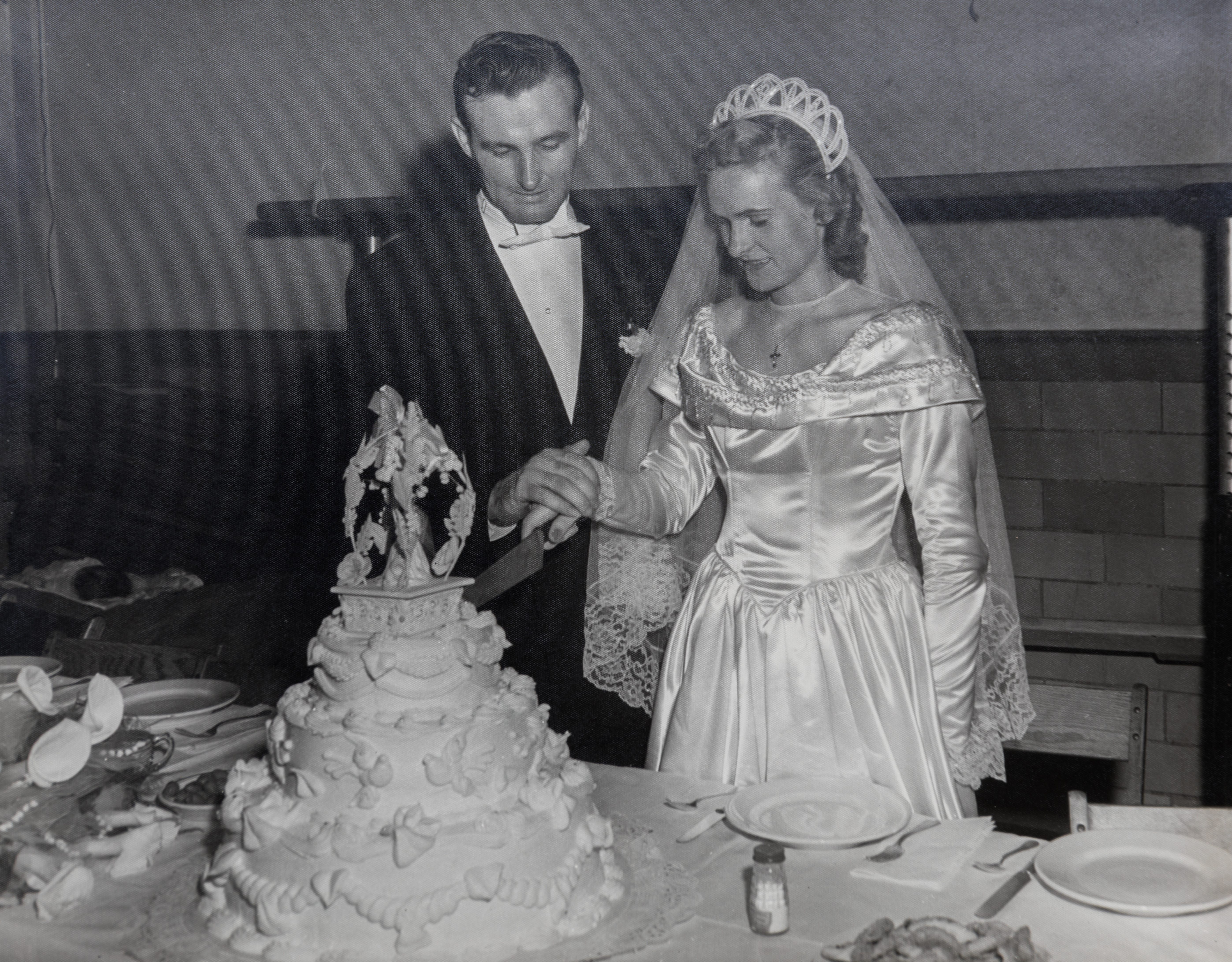
Mom
Genevieve Bednarski Cwynar

Genevieve (Gennie) Bednarski was born on December 29, 1926, in Baden, Pennsylvania. Her father, Felix, was 40, and her mother, Władysława, was 41. She was the ninth of ten children and the last daughter of the family. As the saying goes, they saved the best for last. In this case, she was the last daughter, and her brother, Walter, was the last of all the offspring.
Mom graduated from Ambridge High School in 1944. She worked at Anderson’s Candyland in Ambridge (before it moved to Baden). When I visit Anderson’s I always mention that. It does not get me a discount, but it does make for friendly conversation.
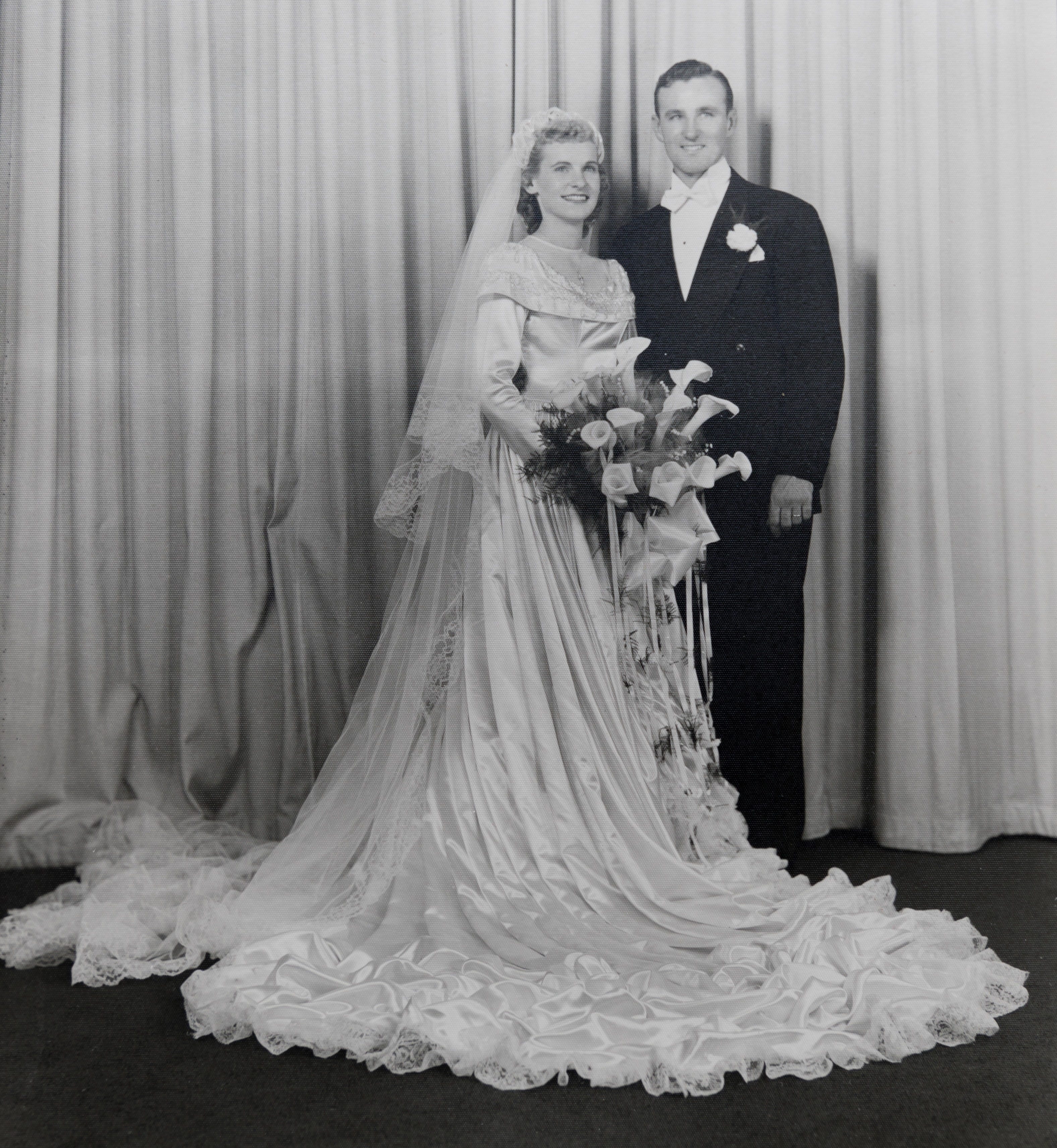
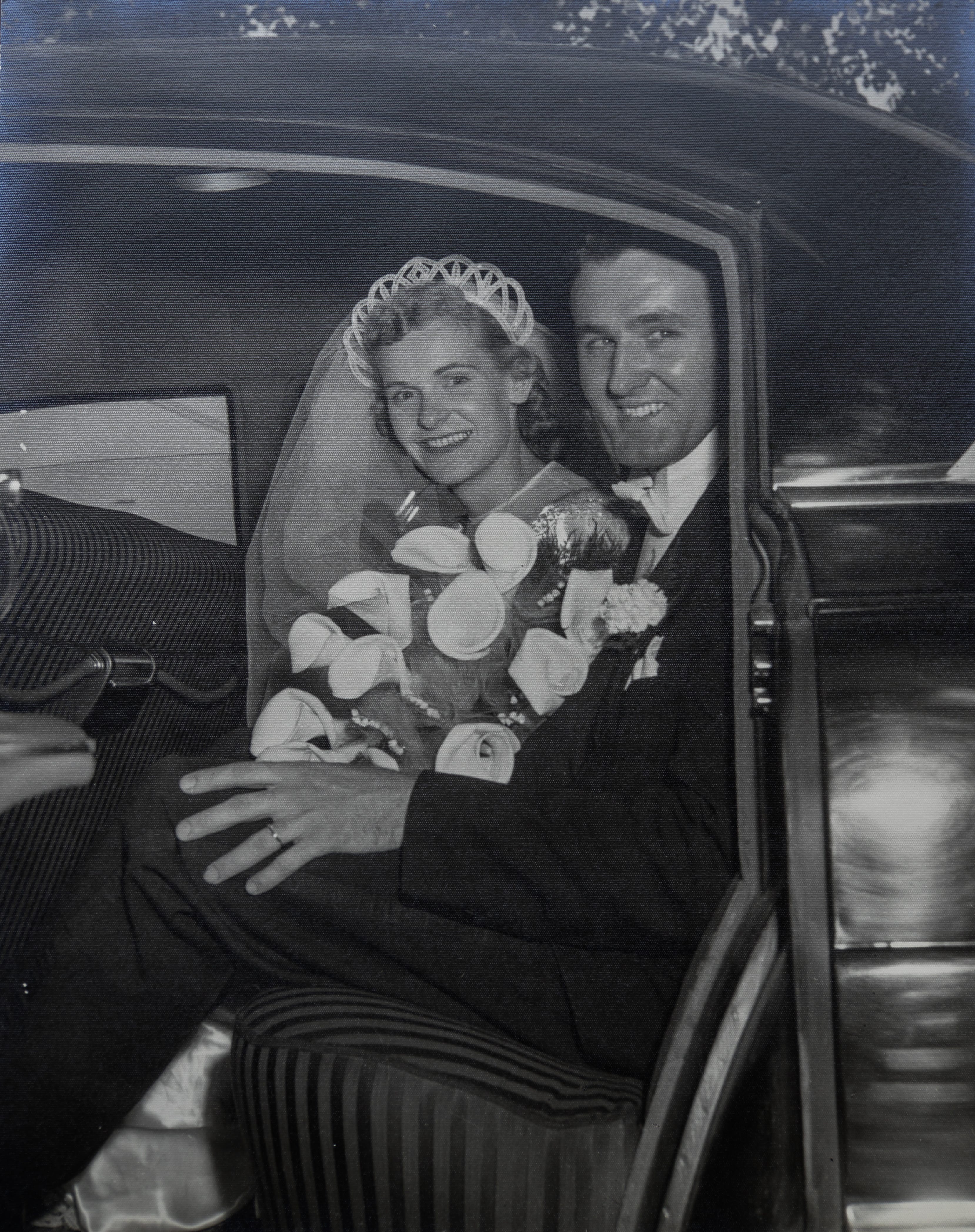
Because Cindy and I met at a dance in Burlingame, CA on July 3, 2009, I like the fact that Mom and Dad met at a Polka dance in the late 1940s. They married on September 9, 1950 at St. Stanislaus Catholic Church in Ambridge. This was Mom’s church. She and her siblings were baptized at this church. My brothers and I, as well as most of my Bednarski cousins were also baptized at this church. Many made their First Communion and Confirmation here, and others were married here. Most of my aunts and uncles were buried from here.
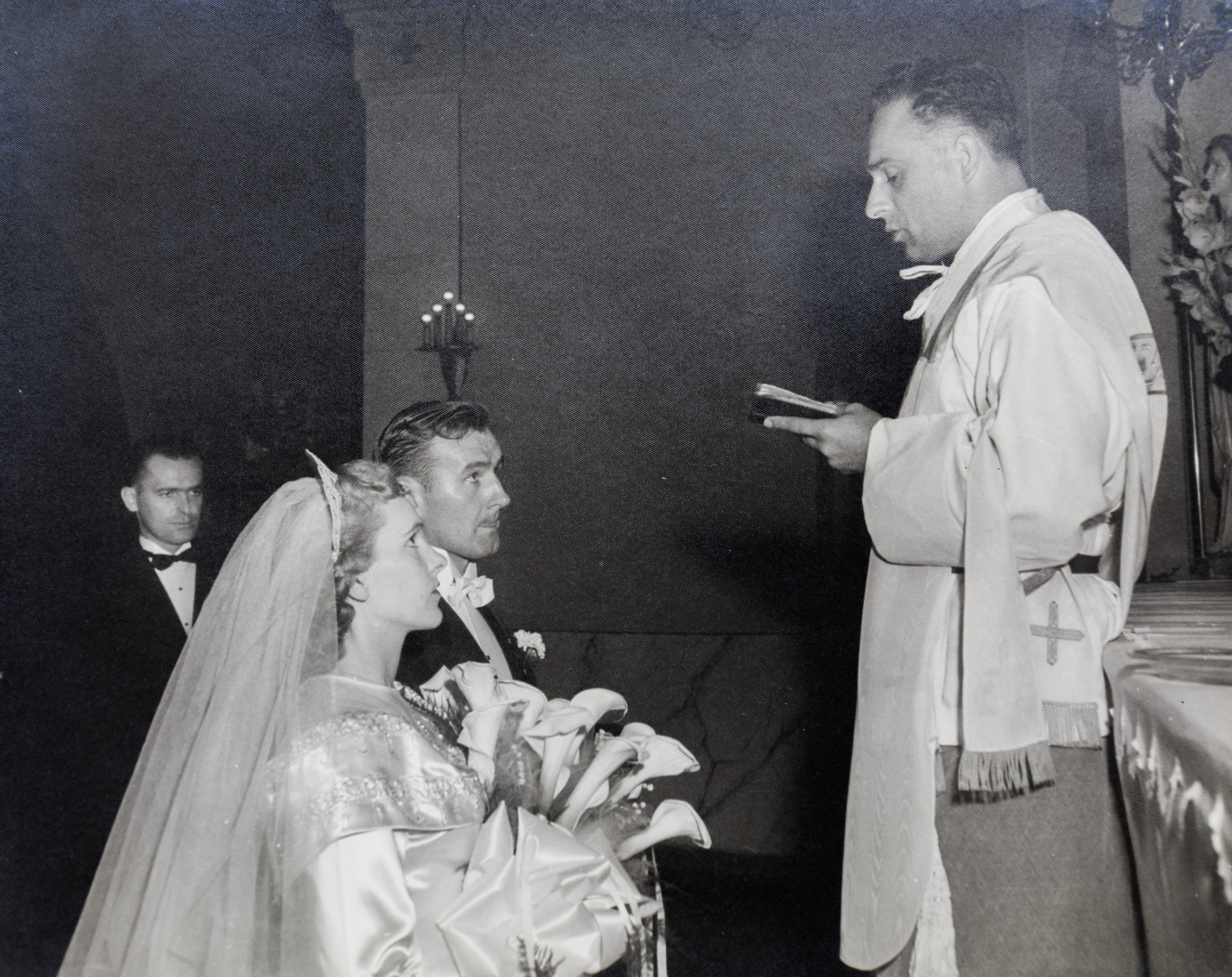
A young priest named Father Zygmunt Szarnecki married my parents. Mom was 23 years old, and Dad was 25. I have their wedding album, and when you look at it, you realize how much more dignified couples and their weddings were compared to the last 30 years. Looking at the photographs, you would think that Mom and Dad were Grace Kelly and Prince Ranier.
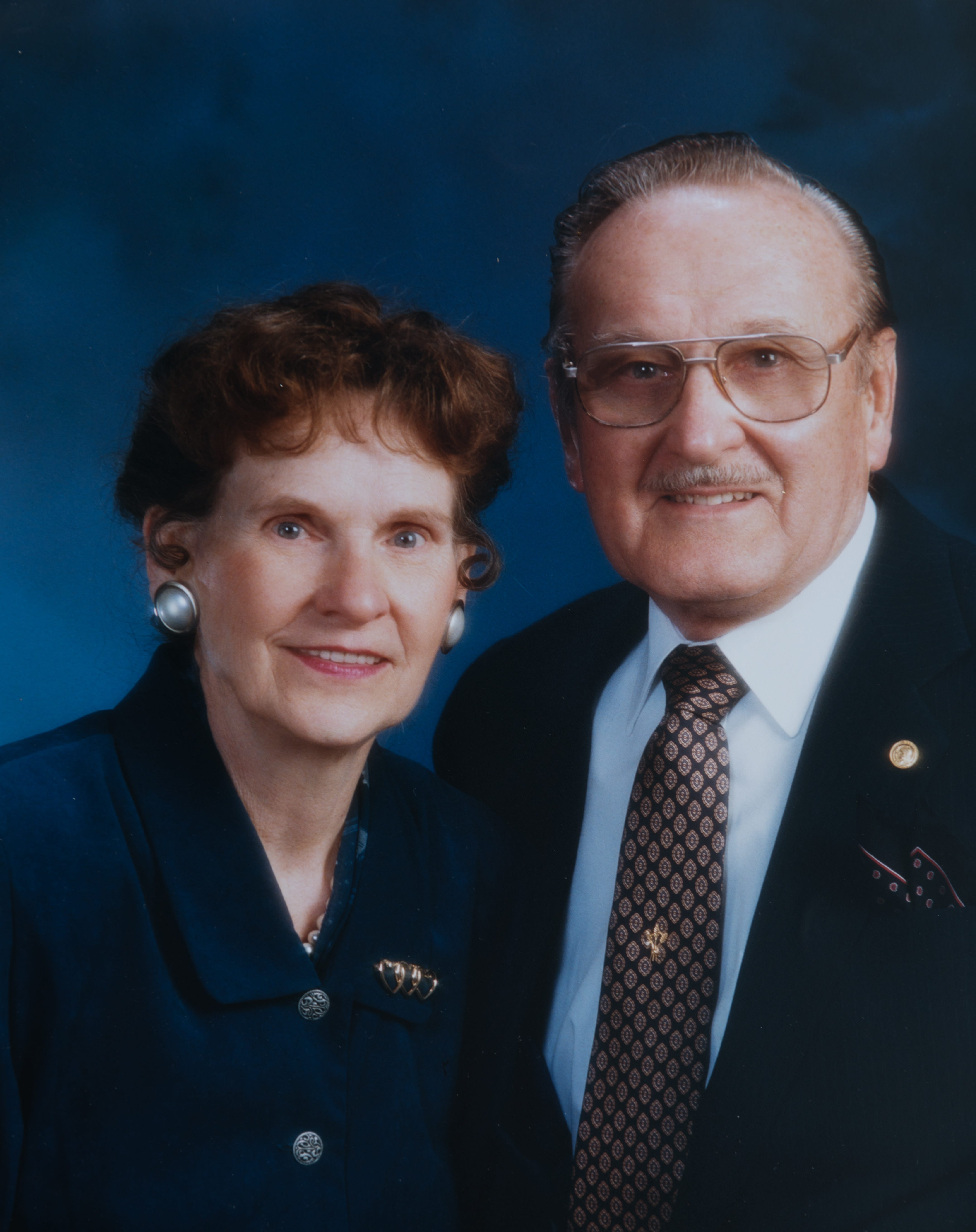
When my parents celebrated their 50th Wedding Anniversary in 2000, I invited Ziggy to renew their vows at St. Irenaeus Catholic Church in Oakmont. He happily obliged. Because we did not want them to object until it was too late, neither my brothers nor I told our parents about this celebration. Mom found out about it. I told her out-of-state brother and sister, Walt and Mary, would have to cancel their trips. Mom accepted the idea, but was not thrilled.
Mom was not a high-profile person, and preferred to stay out of the spotlight. She limited her role to helping at events like the Annual Beaver County Holy Name Society Dinner by pinning corsages onto the lapels of speakers and honorees. Even when she attended Mass on or around her birthday, and the one time that I asked the congregation to sing Happy Birthday to her, she asked me never to do that again. Where many people enjoyed the attention, she chose to be the demure woman.
That said, as we approached the anniversary, Mom informed me that she was not willing to renew her vows in front of the congregation. I was not going to argue with her about this. When Father Ziggy entered the front door of the rectory, I explained the situation. He simply said, “Don’t worry. I’ll take care of it.” He then walked into the living room, greeted everyone, and turned to my mother asking, “Gennie, do you want to go to heaven?” She said, “Yes.” He followed up with, “Good, then you have to renew your vows.” Mom obliged, and all went well from there.
During our childhood, Mom was a stay-at-home mother. Some of the memorable moments that I recall include the following. Mom and Dad filmed the first day of school for my brothers and me entering First Grade. Dad kept all these moments on 8mm film. As an aside, Dad also filmed President John F. Kennedy when he visited Ambridge in 1962. Mom and Dad took Ed and me to the street where he sat atop the backseat of his convertible. The street was renamed Kennedy Boulevard, where our family doctor’s office set. We still have that film.
Mom was a typical 1960s mother. Dad had a good blue-collar job as a First-Class Machinist at J&L. Like his brothers, Ted and Al, who worked as a Teamster and a Pipe Fitter respectively, Dad made enough money to support our family. Mom made sure dinner was ready at 5:00 PM. It was a perfect time because we got home from school about four o’clock. We had time to change clothes and play outside. After supper, we played baseball, basketball or football with Dad. We did our homework at the dinner table, watched some TV and got ready for bed, and either Mom or Dad would come into the bedroom with us and pray with us.
Each morning Mom made sure we were awake and ready for school. We ate cereal for breakfast and toted sandwiches and fruit in our lunchboxes for lunch. Rarely did we eat cafeteria food (a good thing). We all attended Potter Township Elementary School from 1961-1971. John graduated in 1969, and I was a member of the final class, graduating in 1971. Ed finished seventh grade there.
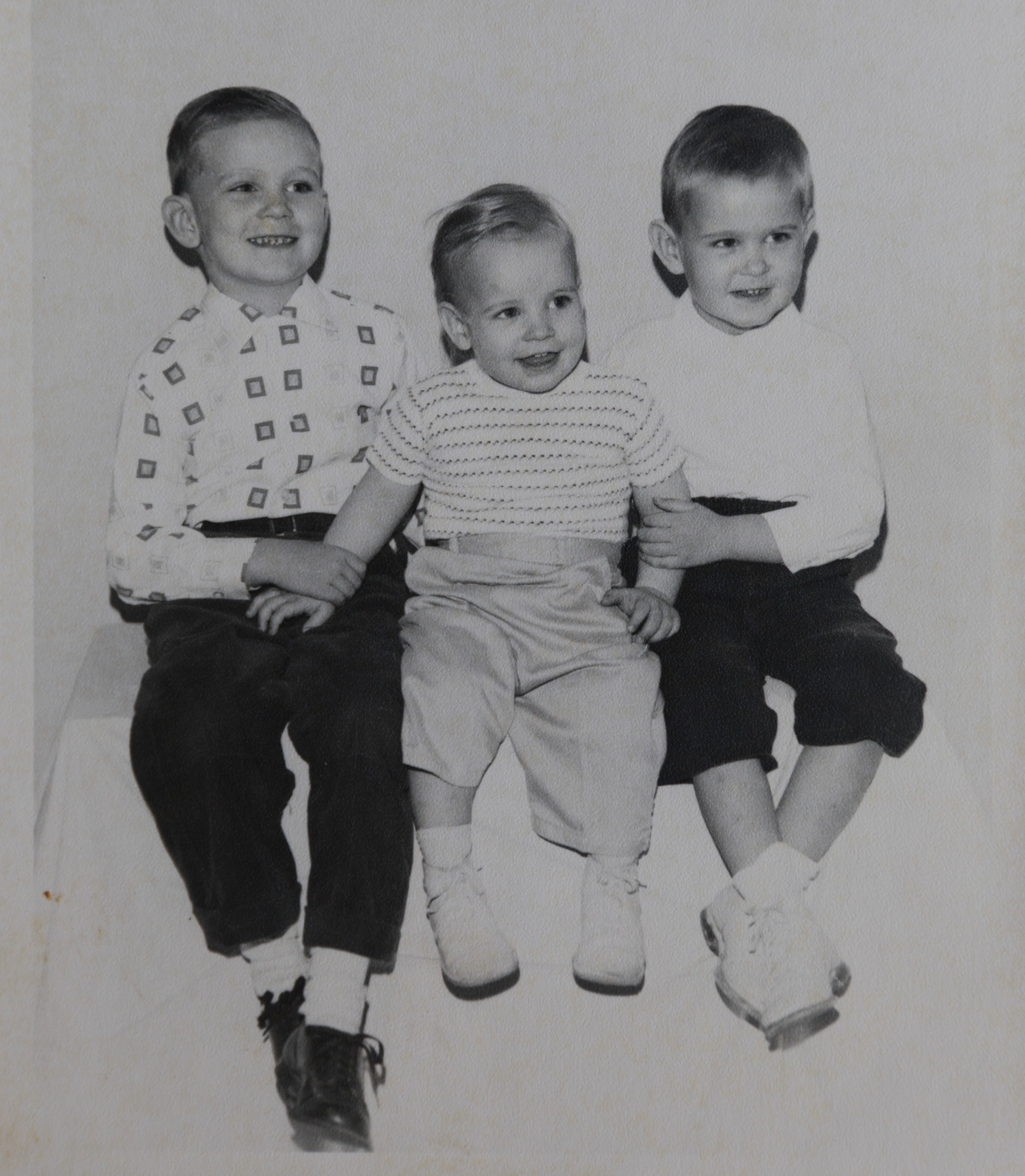
Attending Potter School was one of the best things that happened to me, and I will write about that another day. During the time we attended, our school district was the second richest in the Commonwealth. For example, our final field trip was a one-day round-trip flight on Allegheny Airlines from Pittsburgh to Harrisburg to tour the state capital and the Capitol Building. This was one of the few field trips that neither Mom nor Dad chaperoned.
Mom and Dad were both active in our extracurricular activities. Dad served as a school board director through the 60s, and Mom participated in homeroom parties. Although we could walk to Potter School in six minutes, a bus transported us across State Route 18. My parents did not think it was a clever idea to have children walk along and cross a highway where vehicles typically exceeded the speed limit. So, they arranged for a bus stop across the street from our house. Dad built a shed to protect us from inclement weather. It stood for ten years.
Throughout our school years Mom and Dad attended as many events as they could – band concerts, plays, football and basketball games – as well as helping us with fundraisers for band trips and so on. If they saw we needed help with a subject, they would personally ask the principals and teachers to offer that, and our teachers obliged. Ed, the smartest of us three, didn’t need help, but I needed help in Algebra and Trigonometry.
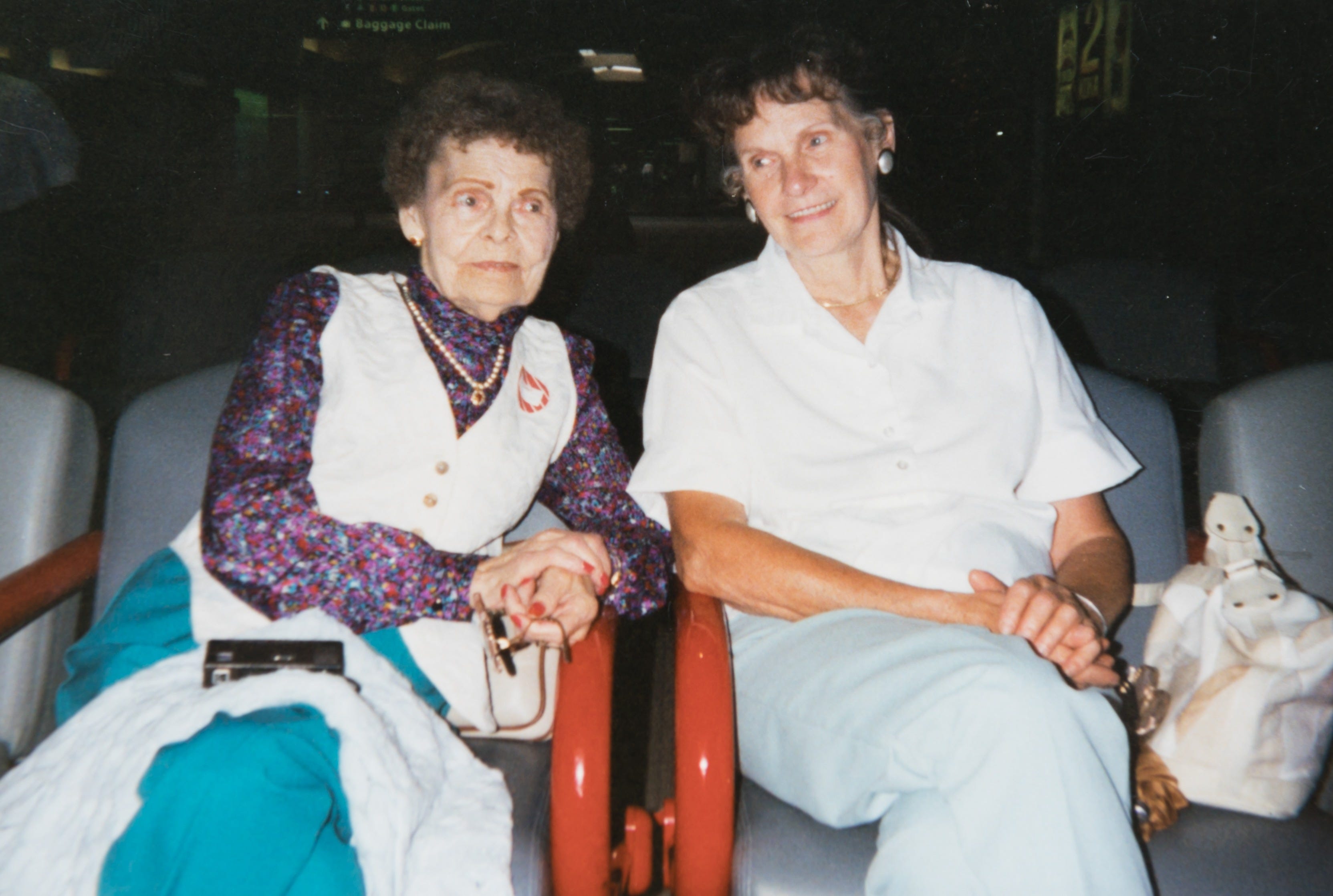
During the time we were in grade school, Mom took on the cause of getting water piped into Potter Township. Along with our neighbor, Anna Taormina, Mom went door to door asking residents to sign a petition. They attended meetings and finally, the Municipal Water Authority of Aliquippa piped water to Potter Township. This foray into the public was generated by Mom’s frustration with a reliance on well water and a cistern that Dad filled with water from St. Joe Lead several times per year. (And as I write this, we have no water! Hahahaha!)
In 1970, the Beaver Valley Mall opened, Mom started working at Gimbels Department Store on Day One. She first worked as a salesclerk in the Boys Department, and later in the Men’s Department. This way, she could set aside clothing in our size and buy it on the days employees got additional discounts. Every birthday and Christmas, our presents came in gift-wrapped Gimbels boxes. Mom worked there for 17 years, and when Gimbels closed in 1987, she finally got to enjoy her retirement.
Another aside. One evening, while we were watching TV, Michael Keaton appeared on screen. Mom said, “I know him. He buys his clothes at Gimbels.” She added that he was always friendly and polite. Michael Keaton was not the first actor Mom met. Many years earlier, Mom was friends with a woman who introduced her brother by saying, “This is my brother, Charles. He wants to be an actor.” That man was Charles Buchinsky, aka Charles Bronson. He became an actor despite his sister’s doubts.
While we were boys, Mom made sure we were present at all activities: Cub Scouts, 4-H, Altar Boy practice and serving duties, etc. On occasions when Dad worked on Sunday, she called neighbors to make sure we all had a ride to Sunday Mass.
Throughout our high school years, Mom and Dad got more involved in church and the Polish National Alliance, ensuring that we attended every CCD class and participated in all the practices, rehearsals and performances of the Krakowiaki, the song and folk-dance ensemble of Monaca’s Polish National Alliance Group #841. Mom was active in Christian Mothers and Catholic Daughters of America. She and Dad even chaperoned the weeklong training sessions at Alliance College in Cambridge Springs, PA. They were not considered “helicopter parents” but simply responsible parents.
I would be remiss if I did not mention what Mom taught us. First, she taught us how to pray. On the inside of the hall closet door where we hung our coats hung a large glossy paper picture of the Stations of the Cross. On every Friday during Lent she would have us repeat after her the words that focused on each of the fourteen stations. She also made certain that we memorized the prayers necessary for an Altar Boy to speak while serving Mass. When she ironed clothing in the basement, she had us sit on the steps and repeat Polish phrases such as Jak się masz? (How are you?), Dziękuję (Thank you), Idę do domu. (I’m going home), and Idę spać. (I’m going to bed).
She also taught us how to peel and boil potatoes, which I usually burned. We learned how to hang laundry on the clothesline and how to wash clothes on a wringer washer. Throughout the summer, Mom taught us how to weed the vegetable garden, pick vegetables and make compost. Since I am at it, I would like to add that Dad taught us how to tie a necktie, change the oil and spark plugs in a car, among other useful things.
Lastly, Mom taught me how to care for someone who is dying. In 2005, I was serving as the Parochial Vicar at St. Bernard Catholic Church in Eureka, CA. I asked to serve in the Diocese of Santa Rosa, and when the discussion arose at the meeting of the personnel board, The Reverend Loren Allen, Pastor of the aforementioned parish, responded to a question: “Should we accept someone from outside the diocese?” He scanned the room and said, “Aren’t we all from someplace else?” He was right. Most priests were from another diocese before landing in Santa Rosa. He requested that I be sent to St. Bernard. I arrived in June 2005.
Father Allen suggested that since Christmas fell on a Sunday that year I take a week and spend it visiting my mother. I arranged the trip, and came home. I was invited by my friends, Bill and Kari Katz, to attend their holiday party in Cheswick. I conducted the wedding of Bill and Kari, and subsequently baptized their first two children. Bill is a cardiologist, and I had asked him to run some tests for Mom when she was having health issues in the summer. He explained that Mom had multiple myeloma and amyloidosis, and that she had between two months and two years to live. I asked him what I should do. He simply stated, “I don’t know what you will do but if it were me, I would come home.”
My brother, Ed, had used up all his vacation and sick days doing his best to care for Mom. At the time, he lived in Swissvale, east of Pittsburgh, and worked as a chemist at USX. He implored that I return home to help care for Mom. I agreed to return.
Multiple myeloma is an incurable cancer of the plasma cells, a type of white blood cell in the bone marrow that produces antibodies. It causes abnormal cells to accumulate, leading to bone damage (lesions), kidney issues, and high blood calcium levels. Key symptoms include severe bone pain (back/ribs), fatigue, frequent infections, and anemia. In Mom’s case fluid built up in a sac in her torso. The sac would push and the pressure against her ribs created excruciating pain.
I arrived home in February 2006. I was assigned the Parochial Vicar at St. Frances Cabrini Parish in nearby Center Township. I knew a lot of people there, including the pastor. Many of my high school classmates, and my attorney, the late Daniel D’Antonio, were active members. But my main purpose was to care for Mom.
The pastor, Father Kleppner, permitted me to live at home. This allowed me take Mom to her many doctor’s appointments, cook her meals, shop for her groceries, launder her clothes, and shampoo her hair, among other duties. I also learned to deal with what the cancer was doing to her. I relieved the pressure on her ribs by evacuating the fluid in her torso. One of her pulmonary doctors inserted a port in her side. Every other day, I connected to the port a specially designed plastic vacuum bottle. As soon as the connection was made and I turned the valve the bottle would vacuum a quart of fluid from her body into itself. The process took less than five minutes. Instantly, Mom felt relief.
During that year, most of Mom’s appointments were at UPMC’s Hillman Cancer Center. She not only met with cancer specialists, but also pain specialists, and an array of other physicians. Because she slept late, we scheduled all of her appointments late morning or early afternoon.
As a caregiver, I learned quickly to ask others for help. The drive from the Hillman Center was over an hour, and at times we would get home in the evening. I asked members of the church to prepare low-sodium meals for us, and to sit with Mom when I had to be at church, visit the sick or conduct a funeral. Ladies prepared dinners that would last at least a second, and often a third day. Church couples, many of whom Mom already knew, would sit, talk and listen. They helped her walk when necessary, and brought a book for the time when she would grow tired and nap.
In the last weeks of her life, after the doctors did all they could, Mom did little except sleep. Ed and I finally contracted hospice to come to the house during the last week of Mom’s life when she had slipped into unconsciousness. The hospice nurse, also a member of the church, visited twice. Mom showed no signs of discomfort. She just slept.
On All Saints Day 2006, I was scheduled to lead worship and preach the Noon Mass. I had asked a woman from St. Frances to sit with Mom while I was at church. She was one of many true saints from the parish who cooked meals and sat with Mom throughout the year. When I returned home, we went into the bedroom where Mom was sleeping on her hospital bed. Her breathing was very shallow. At one point Mom stopped breathing and the woman said, “I think she’s gone.” Mom took another breath. I replied, “Not yet.” A minute later, Mom passed. It was two o’clock.
I had no regrets for all I did for Mom in the last year of her life. I conducted her funeral at St. John’s Catholic Church in Monaca. It is where our parents raised us in the Christian Faith, and is the most beautiful church in Beaver County. We laid Mom next to Dad at Mt. Olivet Cemetery in Hopewell. It is where Dad’s parents and our oldest unnamed brother and Ed are buried. Cindy and I will be buried there eventually.
When Dad died suddenly, I was not prepared, and reacted differently than after Mom died. In the days after Dad died, I cried my eyes out, but in the days after Mom died, I never cried. Like I said, I had no regrets for what I did for Mom in her last days.
If you have any memories of any Cwynar or Bednarski Family members, I would appreciate it if you would share them with me. Later this year, I will send a document to family members. After that, I can share it with future family members. Thanks in advance for reading and supporting me.